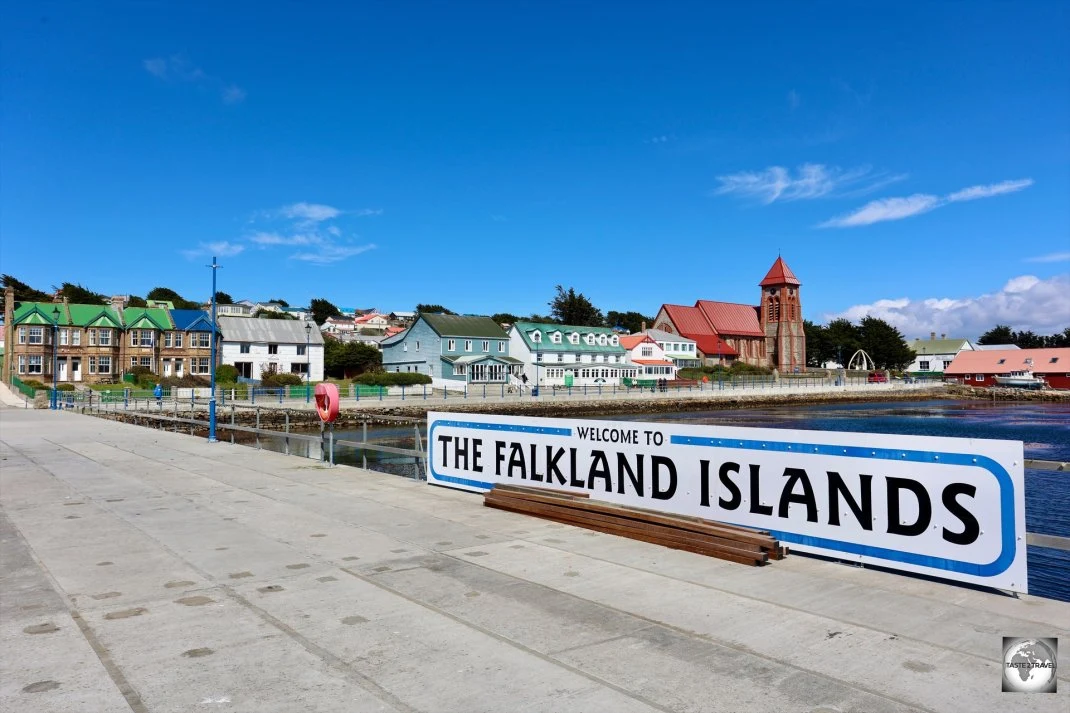
Food crisis in Malvinas
A technical report commissioned by Malvinas government itself reveals that local fresh food production is fragile, expensive, and vulnerable to climate conditions, forcing the importation of most products from thousands of kilometres away. The proposed solution — a state-of-the-art mega-greenhouse — does not resolve what the archipelago cannot admit: that continental Patagonia is just around the corner.
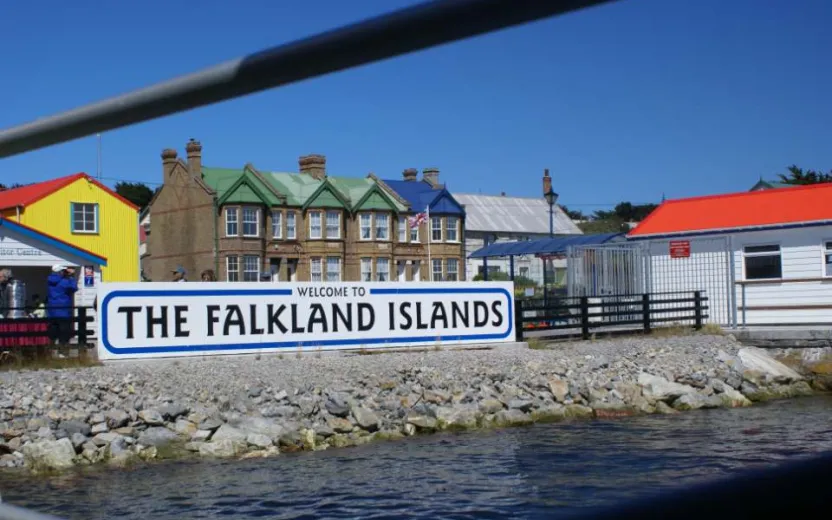
A technical report prepared by the consultancy ADAS (RSK Group) at the request of Malvinas government has brought to light a reality that until now was usually handled with caution: local fresh food production is fragile, expensive, and depends heavily on adverse climate factors, forcing the importation of most products from thousands of kilometres away.
The study, whose second phase was published by the outlet Penguin News, proposes the construction of a half-hectare or one-hectare greenhouse with cutting-edge technology (LED lighting, water and heat recycling, CO₂ control) in an attempt to guarantee the year-round supply of vegetables. But the statements from local authorities themselves reveal the difficulties the archipelago faces in achieving even a minimum level of food security.
Hostile climate and crop losses: an unresolved problemThe Deputy Director of Development and Commercial Services of Malvinas government, Steve Dent, acknowledges that weather conditions are a permanent obstacle: "Any variation in the weather… anyone who grows potatoes in Malvinas will tell you they lost most of them to a few frosts."
He also admits that local production is today less resilient than it was two years ago, when the government took control of the state-owned company Stanley Growers. The loss of land and polytunnels due to a port project, combined with the slow pace of replacement, has worsened the situation: "I think local production is today less resilient than when we took it over."
The high cost of distanceOne of the most significant pieces of data in the report is the explicit acknowledgement that the main factor driving up food prices is the import freight cost. "The biggest cost to the customer is the cost of importation. We would import significantly less than we do today," Dent admitted.
This dependence is not a voluntary choice, but a geographical and political consequence: Malvinas maintain no trade agreements with neighbouring South American countries, and the only regular supply of fresh produce arrives from thousands of kilometres away. For a population of around 3,800 people, this translates into high prices and a limited supply of fruits and leafy green vegetables.
A high-tech greenhouse: solution or costly sticking plaster?The alternative put forward by the report is technically ambitious: a greenhouse of up to one hectare, with LED lighting powered by renewable energy, which would allow year-round cultivation even during the darkest months. Dent estimates that the investment could be recouped in around ten years, and that the local production cost could eventually fall below that of imported products.
However, the official himself introduces a note of caution: "It all works in Europe, the question is whether it will work in Malvinas." Wind, logistics, the availability of skilled labour, and the so-called Malvinas factor — the general extra cost of operating in the archipelago — are all variables that still need to be assessed.
What the report does not say: the South American alternativeFor observers familiar with the regional geography, what the article does not mention is equally telling. Malvinas lie just 500 kilometres from the Argentine mainland coast, where regions with equally cold climates — Patagonia, Tierra del Fuego — have developed successful greenhouse vegetable production at significantly lower costs.
Cities such as Río Gallegos, Ushuaia, and Punta Arenas receive fresh fruit and vegetables weekly from the Río Negro Valley or the southern mainland. Yet no regular commercial channel exists connecting those productive centres with Malvinas, despite their geographical proximity.
This disconnection is not a natural phenomenon, but the result of decades of absent bilateral agreements, which forces islanders to import products that could be obtained at a fraction of today's price.
A supply model with visible costsMalvinas government itself acknowledges that the current model has clear limitations. Stanley Growers, the state-owned company, cannot even supply the demand from the British military base or from tourist cruise ships: "We cannot produce the quantity or the quality at the right price to service those two markets."
In that context, the proposal for a high-tech greenhouse appears more as a palliative policy than as a structural solution. It does not resolve external dependence — it merely shifts it from the ship to the local soil, with a multi-million-pound investment that will have to be financed by taxpayers or by the islanders themselves.
A reality that invites a reconsideration of optionsThe ADAS report and the statements by Steve Dent highlight an objective fact: the archipelago faces serious difficulties in guaranteeing access to fresh food at reasonable prices, and the solutions available so far have failed to reverse that trend.
Building a state-of-the-art mega-greenhouse may be a technically viable response, but it is also a symptom of the rigidities of the current supply system. For any outside observer, it is impossible not to ask why options for regional cooperation are not being explored — options that, without affecting the identity or interests of the islanders, could offer cheaper, fresher food with a lower carbon footprint.
In the meantime, the population of Malvinas continues to pay high prices for products that, just a few hours' sailing away, can be obtained at a fraction of their cost.
Source: Penguin News (Malvinas). Statements by Steve Dent, Deputy Director of Development and Commercial Services, based on the ADAS (RSK Group) report.