🌉 Infrastructure
Chiloé will no longer be an island: the mega-bridge that connects southern Chile end to end
After more than half a century of deferred dreams, the Chacao Bridge is moving toward its inauguration in 2028. At 2.75 kilometers long with a clearance of 54.9 meters, it will transform a 50-minute ferry crossing into just three minutes on the bridge — putting an end to centuries of geographic isolation of Chile's southernmost archipelago.

A project that redefines the Patagonian map
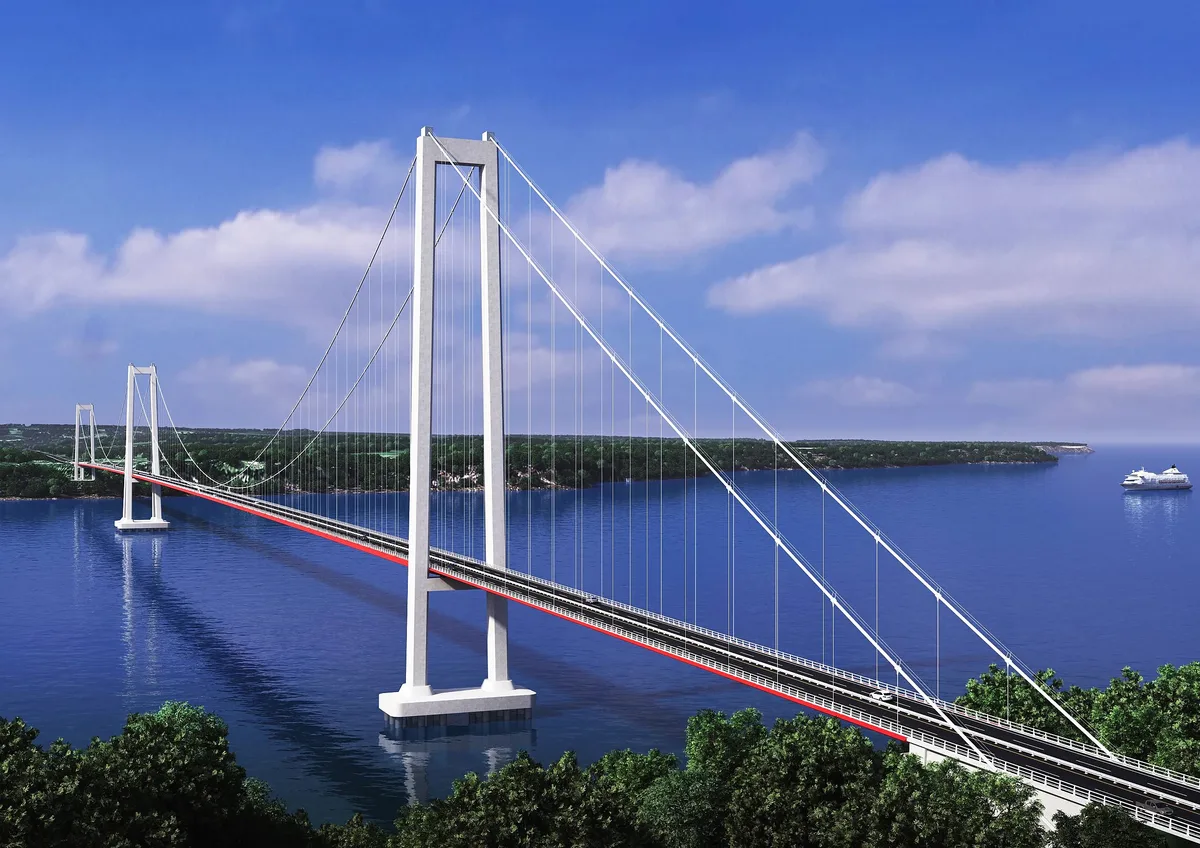
The Chacao Bridge is the most ambitious road infrastructure project in Chilean history. Its 2.75 kilometers are divided into two main spans: 1,155 meters on the Chiloé side and 1,055 meters on the mainland side, with a central free span of 300 meters over the channel. Its clearance of 54.9 meters above mean tide will ensure the unrestricted passage of large vessels through the Chacao Channel, one of the busiest maritime routes in the far south. According to Chile's Ministry of Public Works, the project was 63% complete as of February 2026, with inauguration scheduled for October 2028. Once finished, Route 5 will run uninterrupted from Arica to Quellón, definitively integrating the archipelago with the rest of the national territory. The total cost of the project is around 1.1 billion dollars.From 50 minutes by ferry to three minutes by bridge
The most concrete and tangible change for islanders will be the elimination of the ferry as the only link with the mainland. Today, crossing the Chacao Channel takes about 50 minutes by boat, plus long waits that during peak season — the austral summer and winter holidays — can stretch two to three hours, subject to weather, tides and ferry capacity. The bridge will reduce that journey to just three minutes, available 24 hours a day, 365 days a year. For Chiloé's families, a permanent connection means being able to transport a patient to a mainland hospital without depending on tides, accessing higher education without planning around ferry schedules, and receiving basic supplies in the middle of a Patagonian storm. The bridge is not just infrastructure: it is the possibility of living better without having to emigrate.The corridor that is also transforming Argentine Patagonia
The impact of the Chacao Bridge does not stop at the Chilean shore. For Argentine Patagonia, the project opens a new dimension in the southern bioceanic corridor: for the first time, Chilean Route 5 will reach Quellón by land, at the southern end of Isla Grande, completing a road axis that connects the Atlantic with the Pacific without interruption. This means more direct commercial routes, greater flow for binational tourism, and a revaluation of Patagonian border crossings. For the provinces of Neuquén, Río Negro and Chubut, the bridge reinforces the regional integration that both governments have been promoting for decades. Argentine Patagonian products — wool, fruit, timber, hydrocarbons — will have a more fluid corridor to Pacific ports. In geopolitical terms, the far south will cease to be a periphery and affirm itself as a strategic continental connectivity hub.The economic boom awaiting Chiloé
Economically, the overland connection will boost tourism, one of the island's main drivers. Visitor numbers are projected to double, driving the creation of hotels, restaurants and services. Local products — fish, shellfish, dairy and handicrafts — will reach northern markets faster and at lower cost. Local businesspeople compare the potential impact to that of building the Mocopulli airport, but on an incomparably larger scale.The voices calling for protecting the "inner island"
Not everyone celebrates the connection with equal enthusiasm. In Chiloé, a quiet but constant resistance coexists, articulated around questions that official optimism does not always answer: what kind of Chiloé will arrive on the other side of the bridge?Marine fauna under pressure. The Chacao Channel is one of the most important feeding corridors for the blue whale in the South Pacific. Environmental organizations and scientists from Universidad Austral de Chile have warned that permanent traffic vibrations and the alteration of underwater currents from the piles could affect the migration patterns of cetaceans, dolphins and sea lions that inhabit the channel. The Environmental Assessment Service required monitoring plans, but ecologists consider them insufficient.
Huilliche communities: territory and identity. The indigenous peoples of Chiloé have indicated that the bridge alignment and access works cross areas of cultural and spiritual significance to their communities. Organizations such as the Council of Chiefs of Chiloé demanded a broader indigenous consultation, arguing that the State fulfilled the procedural requirement but not the spirit of ILO Convention 169. Their concerns about the impact on artisanal fishing and ancestral territories were never fully resolved.
The fear of "continentalization." Writers, artists and Chilean activists fear what some call the "continentalization" of the island: the mass arrival of commercial chains, rising land prices that displace long-time residents, and the dilution of local culture — the mythology of the Trauco and the Pincoya, tejuela architecture, curanto gastronomy — under the pressure of mass tourism. "We don't want to become another Puerto Montt" is the phrase that sums up that fear. Real estate speculation is already visible: land prices in Ancud and Castro have risen significantly since the project was confirmed.
Ferry workers. Ferry companies directly employ hundreds of families in Pargua and Chacao. When the bridge comes into operation, ferries will lose the bulk of their traffic. Workers' unions have asked the government for concrete labour retraining plans, but so far responses have been generic. This is the most silent wound the project will leave behind.
The government has responded to these concerns with land use plans, wetland protection regulations and environmental monitoring commitments. But for many on the archipelago, the central question remains unanswered: who designed the Chiloé on the other side of the bridge?
The challenges that marked the journey
In 2019, the construction consortium led by Hyundai requested an additional payment of 300 million dollars; after tense negotiations, the Chilean state agreed in 2020 to an extra disbursement of 138.5 million, well below the amount requested. The extreme conditions of the Chacao Channel — strong currents, hurricane-force winds and tides that challenge any engineering — also forced repeated schedule revisions: the original 2020 completion date was pushed back several times, and the current official schedule targets October 2028, with conservative estimates extending the possibility to 2030.A bridge looking to the future
When the inaugural ribbon is cut in 2028, Chiloé will cease to be an island in the geographic sense, but will remain the same territory of myths, curantos and unique culture — now with a firm connection to the rest of the country, and with Argentine Patagonia a little closer too. The controversies, cost overruns and delays could not stop an advance that has already exceeded sixty percent. It is the symbol of how the far south tackles monumental projects to unite its people, learning from the obstacles along the way. And that is, without doubt, good news for all of Patagonia.Source: This article was produced with information from GLOBALpatagonia.
You may also be interested in