More Than a Match: Argentina vs England, a Semifinal With 649 Stories That Are Never Forgotten
On Wednesday in Atlanta, the ball will roll under the weight of four decades of history. Because when Argentina and England meet at a World Cup, it is never just football.
 J. Martineau
🇦🇷 Argentina
J. Martineau
🇦🇷 Argentina
2026 World Cup — GLOBALpatagonia Report
Mercedes-Benz Stadium · Atlanta, United States
The 2026 World Cup semifinal between Argentina and England will be played this Wednesday, July 15, at 4 p.m. Argentina time at Mercedes-Benz Stadium in Atlanta. But for Argentines — and especially for our Patagonia — this match began long ago. Long before the ball rolls on American turf.
The chant that unites generations
“El que no salta es un inglés” — “whoever doesn’t jump is an Englishman”. The chant echoes in every stadium, in every celebration, in every corner where an Argentine is cheering for the national team. But do the youngest fans really know why you have to jump so as not to be an Englishman?
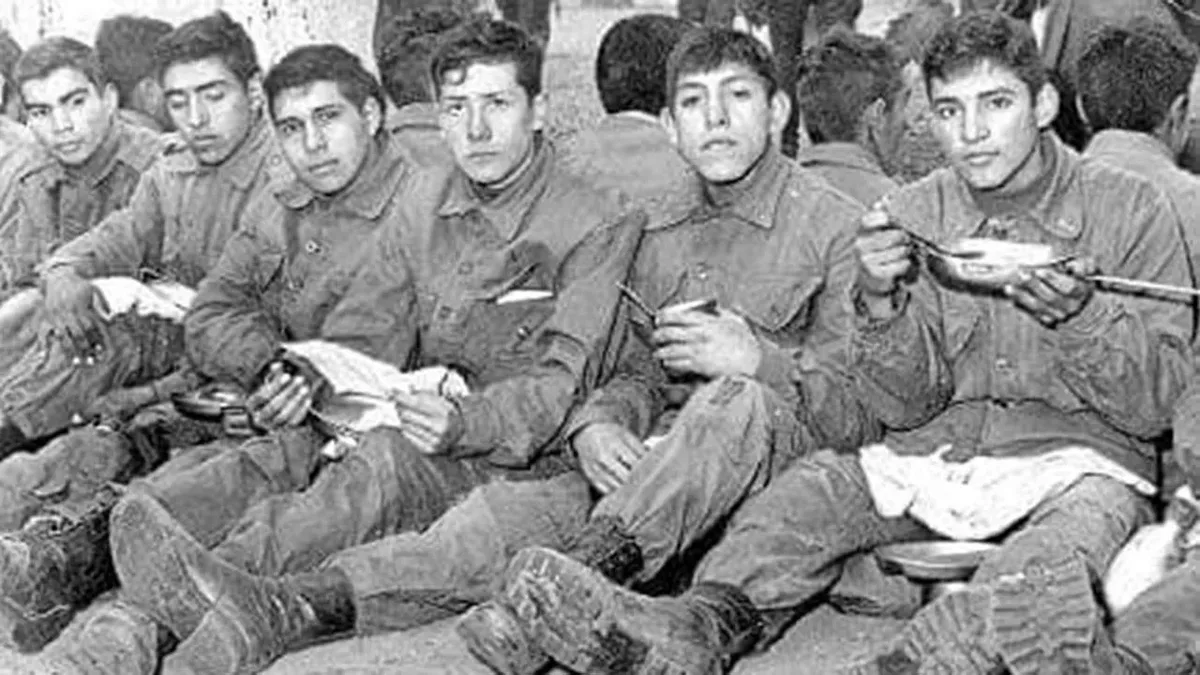
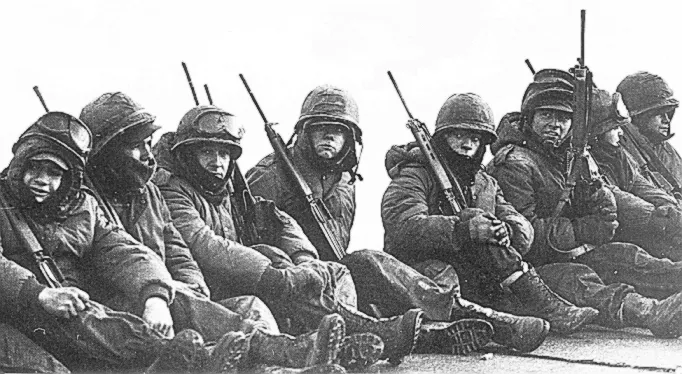
The answer is not in the present. It lies in the Malvinas Islands, 463 kilometres off the Patagonian coast. It lies in 1982, when 649 Argentines lost their lives in a war that the United Kingdom, under Margaret Thatcher’s leadership, waged to maintain its occupation of a territory that does not belong to it.
For the new generations, the chant has transcended its immediate origin. Many young people sing it with fervour — but do they grasp the historical weight of those words? The popular song “Muchachos, ahora nos volvimos a ilusionar” planted a flag: “In Argentina I was born, land of Diego and Lionel, of the boys of Malvinas I will never forget.” That line turned the song into far more than a stadium anthem.
As Juan Carlos Parodi, president of the Ushuaia War Veterans Centre, explained, the song helped keep a shared feeling alive and opened the door to a deeper reflection on history, memory and the meaning of the Malvinas cause for the new generations. The chant, then, is not merely a footballing taunt: it is a reminder that there is a history that is not up for negotiation.
Thatcher, Milei and a controversy that will not close
Amid this history-laden build-up, statements by President Javier Milei have added a controversial chapter. Milei has repeatedly expressed his admiration for Margaret Thatcher, the former British prime minister who led the United Kingdom during the 1982 conflict and ordered the sinking of the ARA General Belgrano, in which 323 Argentines died.

“She was brilliant,” the president said in a BBC interview, standing his ground: he sees no problem in praising a wartime adversary — “There was a war, and it fell to us to lose it.” He even went so far as to call Thatcher one of “the great leaders in the history of humanity”.
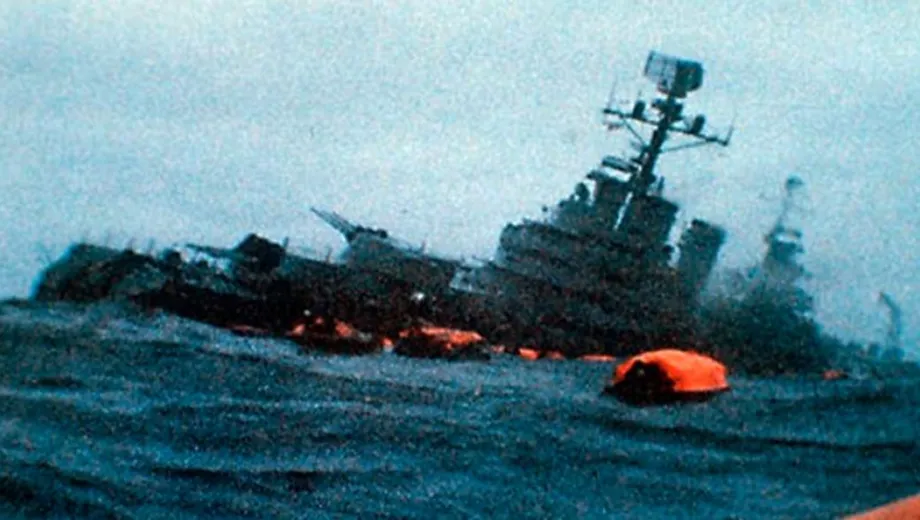
Those statements, especially sensitive in Patagonia because of the war’s historical weight, have drawn strong rejection. Veterans and political leaders argued that such admiration “undermines the legitimate claim” to Argentine sovereignty and consider it an affront to the memory of those who took part in the conflict. Praising Thatcher breaks with a historical consensus in Argentina around Malvinas — a cause that usually unites the entire political spectrum.
The Hand of God and the Goal of the Century

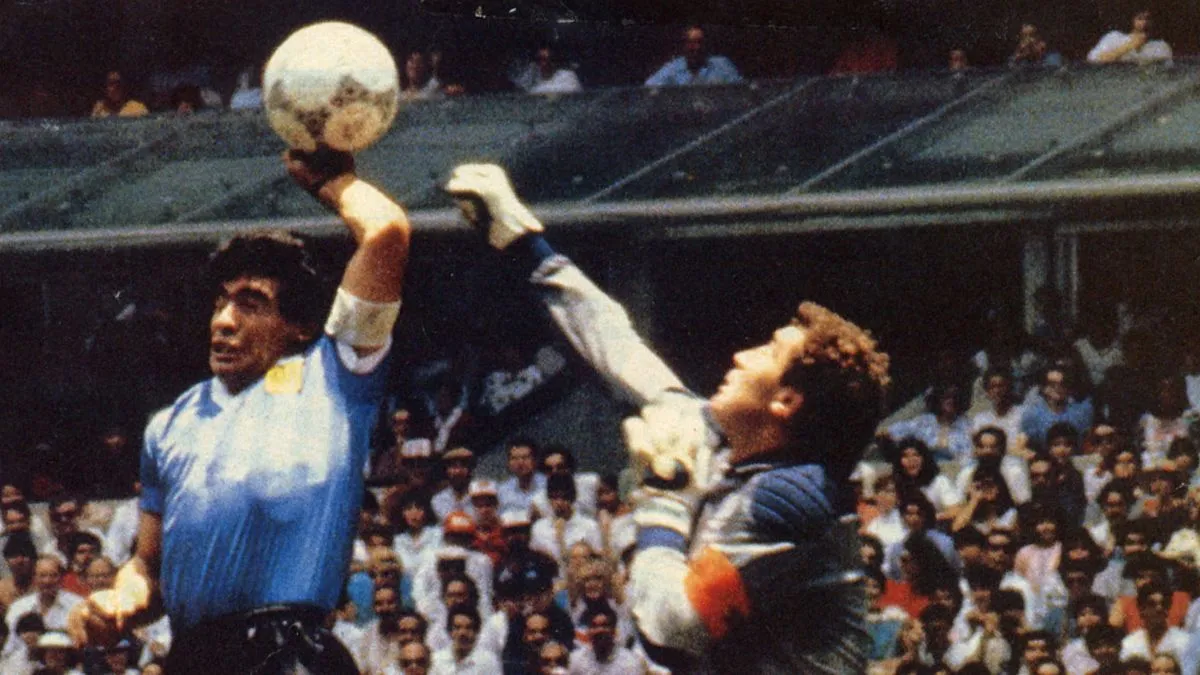
It is impossible to speak of Argentina and England at World Cups without recalling June 22, 1986, at Mexico City’s Azteca Stadium. Diego Armando Maradona — with the “Hand of God” first and the “Goal of the Century” later — sealed a victory that Argentines read as much more than a sporting triumph.
As historian Carlos Sebastián Ciccone, a specialist in the construction of national identities through sport, explains: “There is a national feeling that swells when the national team plays, and it brings to the surface a conflict that remains very much alive in the country.” Argentina carries three Ms in its soul: Maradona, Messi and the Malvinas.
Football, as the highest expression of popular culture, stirs passions that often intertwine with national identity. And when the rival is England, that identity becomes more conscious, more militant.
Sport is not war
Hours before the match, the “2 de Abril” War Veterans Federation issued a statement titled “The Malvinas feeling is not negotiable: memory is defended on every pitch”. The veterans asked that the semifinal be kept separate from the claim to sovereignty over the Malvinas Islands and called for keeping memory alive “without xenophobia or hatred”.
They were categorical:
“Sport is not war. The semifinal is a sporting event of global reach, not an armed rematch nor a historical compensation. Sovereignty is defended in international forums, with diplomacy, historical truth and the peaceful, unrenounceable claim mandated by our National Constitution.”
“May football be a bridge to keep Malvinas present, and to remind the world that our claim is more alive than ever. The ball rolls, the pride in our colours multiplies, but memory remains intact,” they concluded.
An embrace across oceans
Passion for the Argentine national team knows no borders. Seventeen thousand kilometres away, in Bangladesh, thousands of fans take to the streets in sky-blue and white shirts — many wearing Lionel Messi’s number 10 — riding on trucks amid flags and chants.
Why does Bangladesh love Argentina so much? The answer lies in 1982, when Bangladesh backed Argentina in international forums during the Malvinas War. And in 1986, the national team’s triumph with the “Hand of God” sealed a love that endures to this day. The conflict with the British Crown was key to building that emotional bond, together with the figure of Maradona and Messi’s recent triumphs.
Ireland, another country historically wronged by the United Kingdom, also finds in the Argentine shirt a symbol of resistance. And they are not alone. In every corner of the world where British colonialism left open wounds, someone will jump with Argentina on Wednesday so as not to be an Englishman.
The ball rolls, memory remains
This Wednesday in Atlanta, when the 70,000 spectators at Mercedes-Benz Stadium chant “el que no salta es un inglés”, when the Argentine players jump to the rhythm of that ancestral cry, when the ball rolls and the match begins, far more than a place in the final will be at stake.
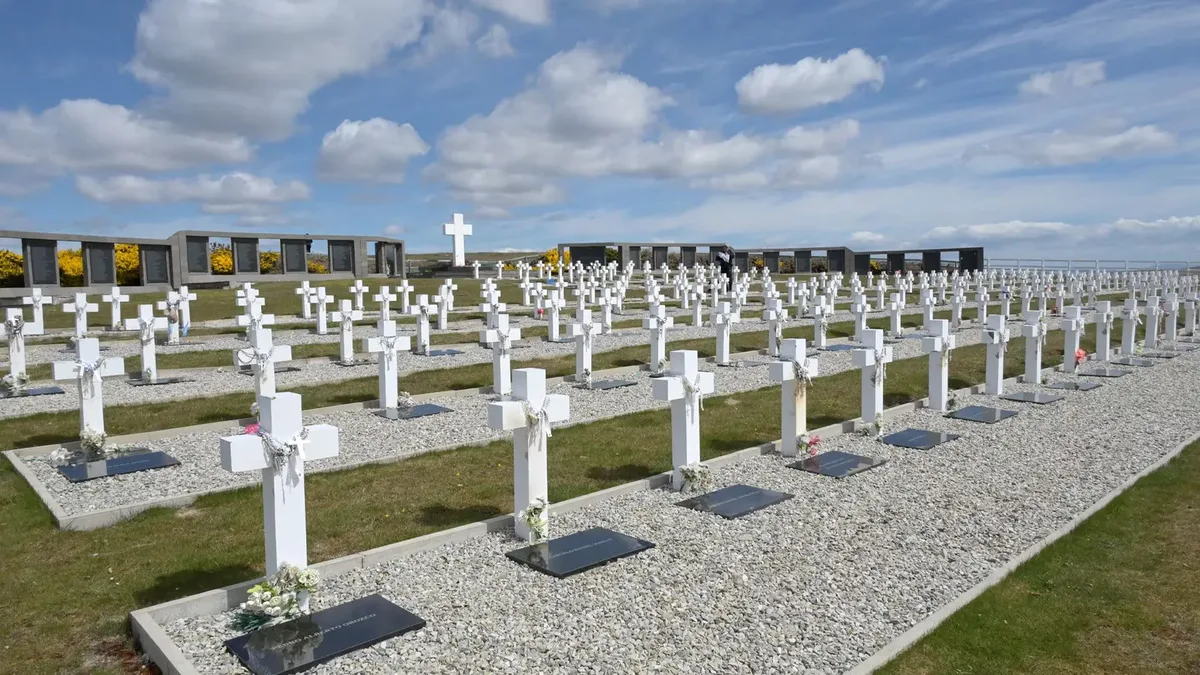
At stake will be the memory of 649 heroes who remained on the islands and in the waters of the South Atlantic. At stake will be the sovereignty of a territory that belongs to us. At stake, as historian Ciccone says, will be a conflict that “remains very much alive in the country” and that “always becomes visible in football”.
Because, as the veterans rightly said, sport is not war. But football, when Argentina and England meet, is the stage on which an entire nation remembers who it is and where it comes from.
Let the ball roll. Let memory remain. And on Wednesday, may all of us who jump do so for the boys of Malvinas we will never forget. Long live Argentina, long live sport!