Santa Cruz: Argentina's Sharpest Construction Collapse
Construction employment fell 40% year-on-year in the first half of 2026 — the worst performance in the country — marking the deepest gap versus the historical average. The UOCRA union blocked Route 3 again this week over stalled dam funding on the Santa Cruz River.
 J. Martineau
🇦🇷 Argentina
J. Martineau
🇦🇷 Argentina
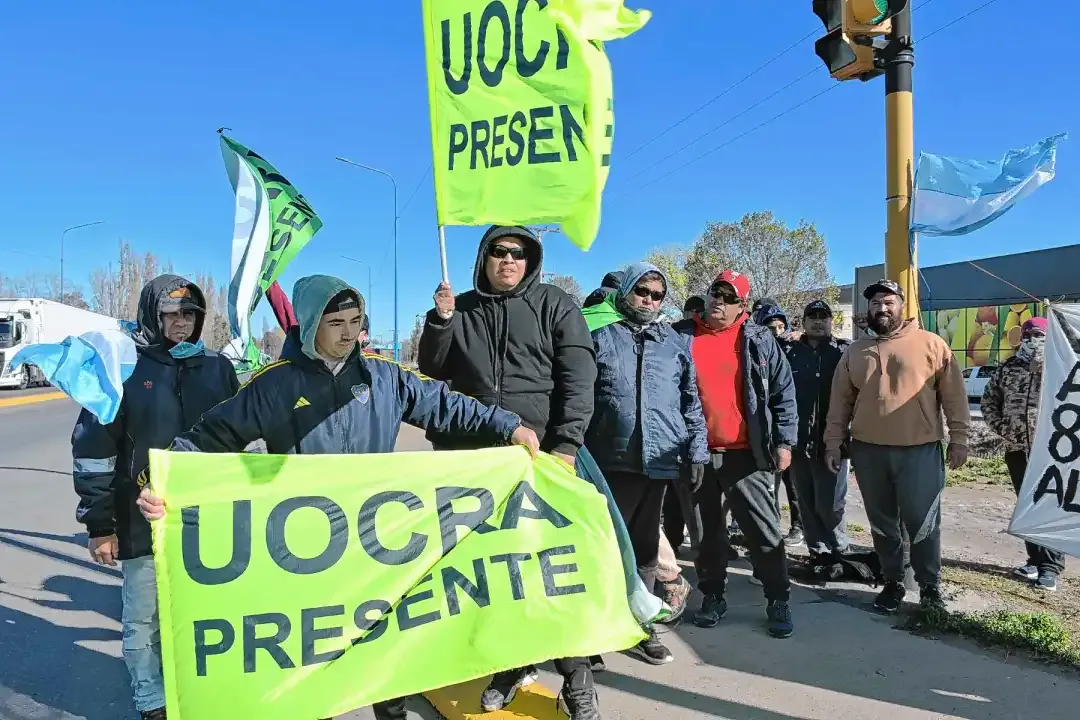
On Route 3, “Work Halted” signs are rusting. On the bridge crossing the Santa Cruz River, UOCRA construction workers blocked traffic again this week, demanding the reactivation of the dams on the Santa Cruz River. It's not an isolated scene — it reflects the worst construction employment crisis in the country.
The collapse in numbers
According to IDARC, INDEC and the Politikón Chaco consultancy, registered construction employment fell 40% year-on-year in the first half of 2026 in Santa Cruz, the steepest drop of any Argentine province. In absolute terms, the sector went from 5,357 jobs in November 2023 to 1,587 in January 2026 — a loss of nearly 3,800 jobs. Measured against the 2007-2023 historical average, the decline reaches 76.2%, the deepest gap in the country.
The paradox is wages: despite the collapse in employment, the average nominal UOCRA wage in Santa Cruz ($2.2 million pesos) is the highest in the country, a legacy of historically high pay scales in Patagonia. Adjusted for inflation, however, real wages fell 15.9% since November 2023.
There was a partial recovery signal: in May 2026 formal employment rose 6% versus April (from 1,586 to 1,681 registered workers, per CAMARCO), and the provincial government highlighted the addition of nearly 100 formal jobs. That recovery, however, is marginal against the more than 3,700 jobs lost since 2023.
The concrete giant that fell back asleep
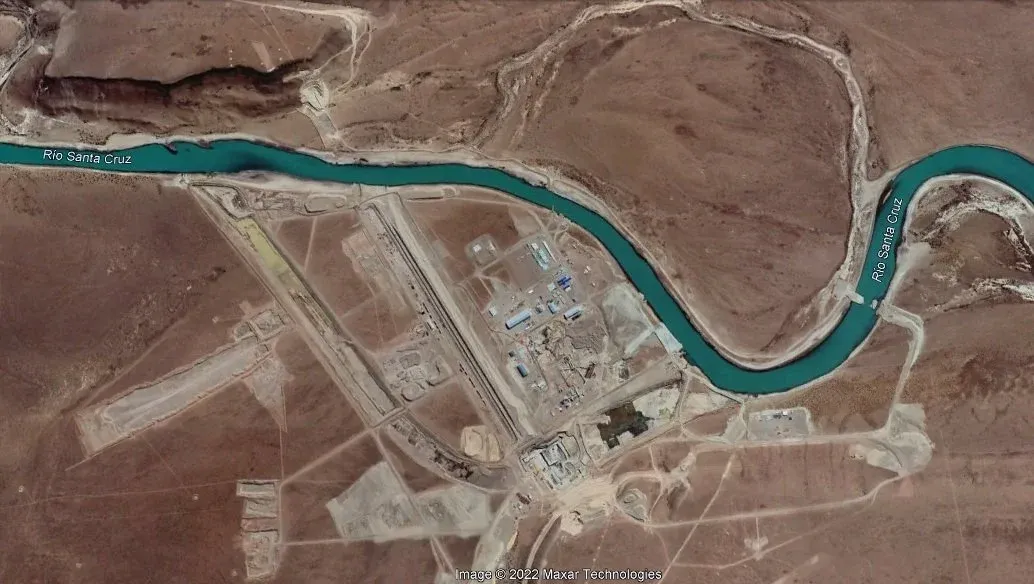
The heart of heavy construction in Santa Cruz has always been the Néstor Kirchner (Cóndor Cliff) and Jorge Cepernic dams on the Santa Cruz River. In January 2026, US$136 million arrived from a loan with Chinese banks and the project emerged from two years of paralysis: Cóndor Cliff is now 20% complete and Cepernic 42%. Once finished, the project is expected to generate 4,000 jobs.
But the relief was short-lived. According to the UOCRA's Internal Commission at the dams, a new tranche of funds — also close to US$136 million — has sat deposited at the Central Bank for more than five months without being released, which slowed construction again and led the contractor to cut staff. It is that freeze, not an earlier one, that triggered this week's blockade on the bridge over the Santa Cruz River.
Handing national highways to the provinces
In April, the national government issued Decree 253/2026, delegating to nine provinces — including Santa Cruz, alongside Corrientes, Santa Fe, Córdoba, San Luis, Mendoza, Río Negro, Neuquén and San Juan — the power to grant tolled concessions on stretches of national highways, including Routes 3 and 40. The national government keeps ownership; provinces can bid, award contracts and charge tolls, with concessions of up to 30 years and a requirement to launch bidding within one year. Toll revenue can only be spent on the concessioned stretch, not on other works.
In a province still marked by the Austral Construcciones overpricing scandal from the previous decade, the scheme raises a legitimate question about bidding transparency that Governor Claudio Vidal's administration will have to answer.
What's at stake
With real wages falling and a flagship project — the dams — hostage to the release of funds that are already deposited, Santa Cruz's construction crisis combines two separate fronts: the pace of Chinese-financed disbursements and the design of the new road concessions. Both will determine whether the sector grows again for the rest of 2026.