
Argentina took Malvinas (Falklands) oil to the Law of the Sea Tribunal — and London shielded its oil companies
Buenos Aires asked for urgent measures in Hamburg to stop Sea Lion, the first major oil project in Malvinas waters. London responded with a law protecting the companies and a letter to Interpol. What each side wants and what could happen.
 J. Martineau
🇦🇷 Malvinas
J. Martineau
🇦🇷 Malvinas
Malvinas — GLOBALpatagonia Report
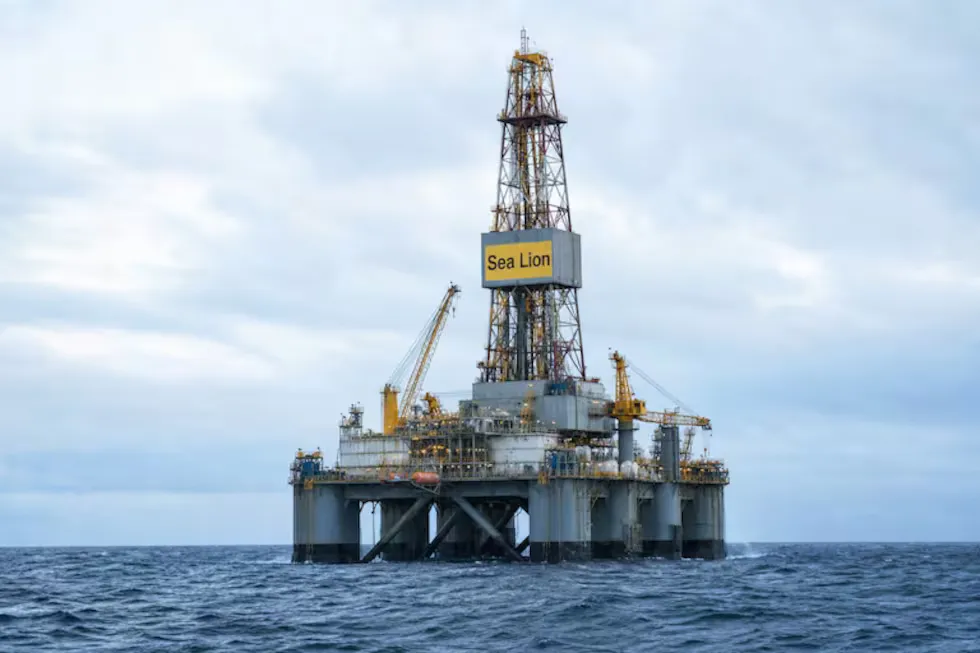
The fight over Malvinas (Falklands) oil has moved from diplomatic notes to international courts. The Argentine government took the United Kingdom to the International Tribunal for the Law of the Sea, in Hamburg, to stop Sea Lion, the first major oil project in the islands' waters. Hours later, London announced it will legally shield the companies operating it and asked Interpol to reject Argentine arrest requests linked to the project.
What Argentina asked for
The request is part of the arbitration the government opened on September 28 under the United Nations Convention on the Law of the Sea. That day the UK was given two weeks to halt activity; the deadline expired on October 12 without a favourable answer, and on the 13th Argentina asked the Tribunal for provisional measures with four specific demands:
- Sea Lion: that the UK prevent the start or continuation of hydrocarbon exploitation in the North Malvinas Basin.
- Exploration data: that it not use information gathered during exploration to Argentina's detriment.
- Marine environment: that it not hinder compliance with the Convention's environmental obligations.
- New permits: that it refrain from measures that aggravate the dispute, in particular new exploitation authorisations.
Filing the request does not suspend the project: the Tribunal must decide whether to grant the measures. In the ARA Libertad frigate case in 2012 it ruled in about a month, so a first decision could come in November, though no date is confirmed.

Foreign Minister Pablo Quirno presented the strategy as “unprecedented” and said it is “the first time Argentina has gone to arbitration on this issue,” with a “peaceful intention of resolving a dispute that is at its heart.” That is true of the arbitration; not of pressuring the oil companies — previous governments had already done that.
What had already been tried
Pressure on companies operating in Malvinas has a history of more than a decade:
- 2011: a law restricting hydrocarbon activity in the area without Argentine authorisation.
- 2012: the operations of five oil companies were declared illegal.
- 2013: criminal penalties were toughened.
- 2015: companies exploring in the area were reported and court-ordered attachments of more than US$156 million were obtained.
What is different now is the setting: an international tribunal and a project that already has an investment decision and production planned for 2028.
London shields its companies
The British response had three parts. First, it reaffirmed its backing for Sea Lion's development and cleared its continuation. That authorisation runs through Foreign Secretary Ed Miliband, whose consent is required for certain hydrocarbon licences in the archipelago under the 1994 Falkland Islands Offshore Minerals Ordinance. London holds that the islanders have the right to develop their natural resources, and that this right is part of its position on self-determination.
Second, it activated its Protection of Trading Interests legislation, which lets it bar companies and individuals under British jurisdiction from complying with foreign laws — in this case, Argentine ones — that impose sanctions or restrictions on those operating in Malvinas. In practice, Navitas and Rockhopper will keep operating despite the sanctions pushed by Buenos Aires.
Third, it wrote to Interpol. According to The Guardian, the UK argues that the “red notices” requested by Argentina “should be considered politically motivated” and describes them as “an attempt to intimidate people and companies from operating in the Malvinas.” Interpol replied that it will respect Article 3 of its constitution, which bars it from intervening in matters of a political character.
“Sea Lion could triple the archipelago's GDP, but Milei has promised to block it.”
British government argument, according to the letter to Interpol cited by The Guardian.
The companies and the timeline
Sea Lion is operated by Israel's Navitas Petroleum (65%), with Britain's Rockhopper Exploration (35%) as partner; Rockhopper discovered the field in 2010. The plan calls for eleven subsea wells tied to a floating production unit. Development drilling is scheduled for 2027, first oil for the first quarter of 2028, and capacity of up to 180,000 barrels a day. On October 7, Rockhopper announced a US$44 million investment in its share of the company that owns that unit.
Argentine pressure already has one concrete effect: according to the Presidency, Halliburton confirmed its subsidiaries will not provide services to the project. Navitas acknowledged it is replacing two contractors, though it says it expects no material impact.
The British contradiction
The decision also opened an internal rift in the UK. The Conservative Party's energy spokesman, Andrew Bowie, welcomed the authorisation but challenged the Labour government:
“Why is Ed Miliband, the man who blocked drilling in the North Sea, willing to allow it in the South Atlantic but not off the coast of Scotland?”
In the North Sea, the British government has for now pushed to halt new oil and gas exploration. In the South Atlantic, by contrast, it backs a new field.
What is really at stake
The Law of the Sea Tribunal does not settle sovereignty disputes, and that is the main legal obstacle to Argentina's strategy: the Convention gives it no general jurisdiction over who owns a territory. That is why the filing relies on concrete obligations over resources, the environment and the parties' conduct while the dispute remains open.
Even so, the move carries clear political and economic weight: it takes Sea Lion to an international forum, exposes the companies to reputational and financial risk, and forces London to show how much it is willing to spend — in laws, in diplomacy and in letters to Interpol — to sustain the project. The Tribunal's decision, expected in the coming weeks, will set the course of the oil dispute in the South Atlantic.
Sources: Página12, The Guardian (via Página12), Infobae, Perfil, La Gaceta, Informe Digital, Rosario3, Splash247.